
 EN
EN
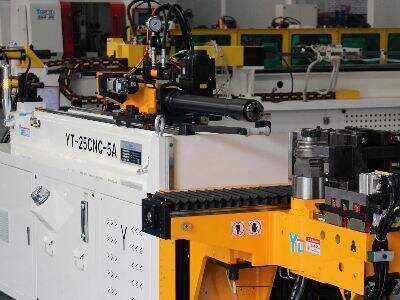
Tube bending plays an integral role in creating numerous machines and structures. There are two general methods for bending pipes; use a pipe bender (CNC pipe bending) or bend them manually (manual bending). Both methods modify the look and function of a pipe, but also incorporate very different modes of doing so. At Yuetai, we’ve seen a lot of both and are here to unpack what makes them different. And that’s useful to know when deciding whether cable is the best path for your own project. Occasionally it may appear that making kinks in pipes by hand is simple or cheaper, however things are able to be done quicker and better using machines such as CNC. This One-day Master Course is conducted in Hydraulics and Pneumatics at National Centre for Hydro-metallurgy, Council of Scientific and Industrial research (CSIR) accredited by MSME/NSIC Govt of India. Many experienced participants have been trained till dateTo address generic issues. Challenges facing cutting-edge companies today are immense. Let’s investigate why CNC pipe bending is a huge leap forward for many businesses and it’s the better option when we need our pipes to be on point
Why CNC Tube Bending is Better for Wholesale Industrial Use
If you are bending a great number of pipes in the same direction, CNC pipe bending is really where it has the time to shine. Picture bending hundreds of pipes by hand, it takes forever, and every pipe is slightly different. Computers direct every move of CNC machines at Yuetai. This allows the machine to stretch pipes the same precise way, every time. This is a time and money saver as there is less material waste, with fewer mistakes to be made. And CNC machines can bend pipes in complex curves that are difficult to make by hand. For instance, large factories or automobile manufacturing require pipes that fit snugly into openings. CNC pipe bending makes these problems disappear effortlessly. Workers do not have to exert themselves as much physically, and their time can be spent inspecting the work rather than bending pipes all day. And with CNC machines that don’t get tired and can run all day, production does keep going. The CNC machines can cut and bend it without any damage or cracking, whether the conduit is particularly thick or made from tough materials. Less damaged pipe means less expense. We understand at Yuetai that many industrial customers rely on this type of reliability. By hand is often slower and relies a great deal on the skill of whoever’s bending it. And if someone is tired or not paying the right amount of attention, the pipe might bend wrong and have dents. This is why CNC pipe bending is also usually the preferred choice when large volumes of pipes are needed to be produced with speed and accuracy for large projects
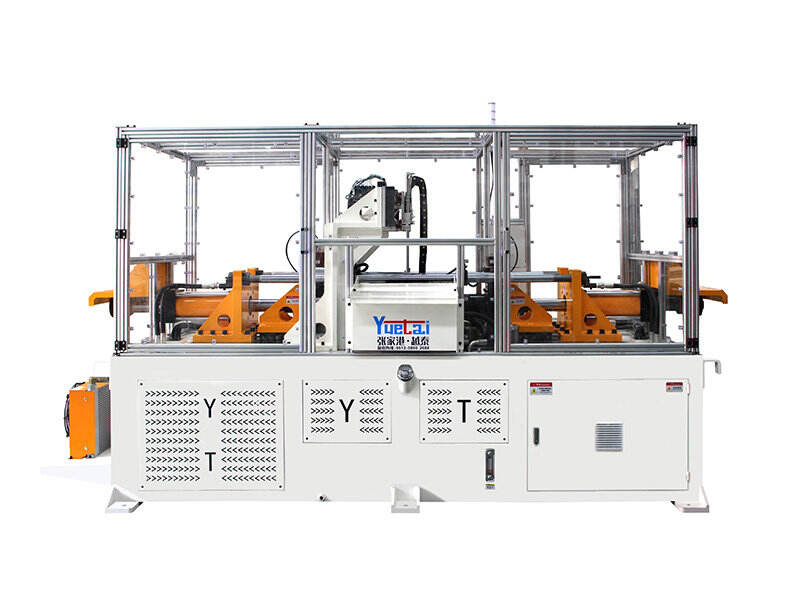
How CNC Pipe Bending Increases Precision As Compared To Manual Bending Methods
Precision is everything where bending the pipe goes. In the case of pipes serving machines or buildings, a minuscule error can spell big trouble in the end. CNC pipe bending relies on special software to map out every angle and curve before the machine begins its bending. This is all to say that the pipe comes out perfect first time. The machine monitors the speed, pressure and angle very carefully so that the pipe does not become wrinkled or cracked. In Yuetai we can see how that precision saves clients wastage and unnecessary cost. “With manual bending, on the other hand, you need a lot of training before getting even close to that kind of precision,” he said. Though people may try as hard as they like, hands are not very steady or repeatable, nor are eyes. Because it is difficult to control the force just right, manual bending can also result in marks or uneven shapes. Consider attempting to bend a pipe using only your hands or some rudimentary tool: It’s hard to make that the same each time. CNC machines size the pipe and toggle the bending process for each piece even if the pipe is minutely different in thickness or shape. This is significant since pipes are not always flawless prior to bending. The machine can correct minor adjustments on its own. It is nearly impossible to exert that kind of control when hand bending. It's true that manual bending can be fine if you want it done fast for just a few pipes or small repair job, but on the other hand when work needs really close fitting pipes, or they have to last a long while CNC is what wins! The precision is tantamount to parts fitting together better, machines running more smoothly and safety being enhanced. The experience of Yuetai Construction Co is one example that investing in CNC pipe bending ultimately pays off by way of fewer hassles and better quality work. It’s like, drawing a straight line with a ruler instead of doing freehand, the ruler just does a better job consistently
Manual Pipe Bending Problems and CNC’s Solution
Hand pipe bending refers to the workers resorting to their hands and simple tools for pipes bending according to demands. This method has been around for many years and can work nicely for small jobs or simple bends. Manual bending, however, has a number of deficiencies. The first is that it’s difficult to make every bend the same. Small errors occur since people bend the pipes by hand. This can result in pipes that are bent too much or too little for them to fit exactly where they are supposed to. Another issue is that bending copper tubing by hand is time consuming and labor intensive. Workers must measure and tussle carefully, slowing the job down, particularly when moving a lot of pipes through the bender. What’s more, bending pipes by hand can be exhausting and worn-out workers are prone to make more mistakes. Pipes may have been inadvertently sprung or had pressure applied at the wrong angle. This can weaken the pipe or cause it to crack. Manual bending is also a safety issue, where tools can slip or excessive force applied
At yuetai, We bring computer numerical control (CNC) technology to bear on these issues. The bending of pipes is controlled automatically by computer on a CNC pipe bending machine. Because the computer reads and follows precise instructions, every pipe is bent in exactly the same way every time. That means pipes fit better and less material is wasted. CNC machines are fast and don’t tire, so they are able to take on bigger jobs without an issue. Computerized machines also minimize the potential for damage: They exert the proper pressure and bend angles exactly. Safety gets better as well, from the fact that it’s not necessary for workers to exert force or handle heavy tools. All in all CNC is making pipe bending faster, safer easier and more accurate for big or small jobs. Yuetai's CNC pipe bender machines can help customers obtain perfect pipes with less waste and fewer mistakes
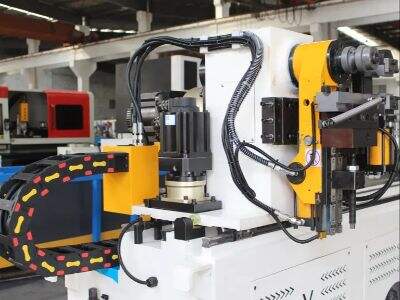
Efficiency Advantages of CNC Pipe Bending for Large Piped Construction work in Bulk
“For many huge industrial markets – such as when you need to make vast numbers of pipes in different shapes, speed and quality, all the production issues are paramount. Manually bending a pipe is too slow and this can lead to delay on big projects. Every pipe may require different bends, and it takes time to measure 7 mark each one, then line up bent pipes. Should pipes not be bent similarly, workers can be compelled to correct or redo them, particularly a time-consuming and costly step. Because of this, large-scale pipe manufacturing requires a more effective method to handle numerous pipes easily and with consistent quality. The CNC pipe bending machines of Yuetai are ideal for this application.’ They are over the top, covering even the most basic step of the bending process using computer programs. But once the device is set up, it can bend pipe after pipe nonstop. That means a lot of pipes can be produced in a small amount of time. Its computer program also helped minimize errors, as it adhered to precise commands and thus each length of pipe matched all others. This helps save time spent to correct any errors
More than that, the CNC machines can bend pipes into complex shapes in ways that are difficult to do by hand. This permits special designs to be met without time-consuming effort or delay by companies. CNC pipe bending machines by Yuetai allows for quick changeover between different size and shaped pipes for easier processing of different jobs on the same machine. This flexibility enables companies to complete jobs more quickly and accept over the amount of work they might typically have. The machines are also easy to operate so workers can concentrate on supervising instead of having to bend the pipes themselves. This is for safety and to lessen the amount of workers getting tired. Hence you can see that CNC pipe bending makes production of large-size pipes more efficient and precise while remaining cost effective. With Yuetai's state-of-the-art CNC equipment, they will never miss a deadline and the delivered pipe products will only be of the highest quality
Understanding Limitations in Pipe Forming
While CNC pipe bending can be extremely beneficial, it’s crucial to remember that there are limitations with all methods of pipe forming. Pipes are constructed of different materials, steel, aluminum or copper, and each responds differently to bending. Some materials can bend without breaking easily, and others may crack or weaken if bent too much. Yuetai’s CNC machines are versatile, working with a wide range of materials, but understanding these limitations can prevent issues. For instance, if a pipe is bent too tightly, it can develop a flat spot or wrinkle on the inside of the curve. This can weaken the pipe or lead to future leaks. Pipes also have minimum bend radii, which you know as the smallest curve they can be bent into without harm. CNC machines can run by these rules precisely, but if a design calls for a bend that is tighter than what the pipe will accept, quality is even worse no matter how good the machine may be
A further limitation is the wall diameter and size of the pipe. In addition, very thick or large pipes require more powerful machines with different bending tools. The machines that Yuetai sells are capable of jointing a variety of pipe sizes though the very largest may need a custom machine. Additionally, some complicated shapes or very sharp corners will require further steps, or an alternate form of forming itself beyond bending. Engineers and workers need to plan careful pipe forming, and know what each pipe or machine is capable of. CNC is beneficial by controlling this to a known point with repeatability, but it’s not going to alter the physical limitations of material implants. At Yuetai, we aid customers in selecting the proper machines and settings to use on their pipes so that everything gets drilled safely and well. Understanding these limitations helps to prevent errors and creates durable pipes for any job
Table of Contents
- Why CNC Tube Bending is Better for Wholesale Industrial Use
- How CNC Pipe Bending Increases Precision As Compared To Manual Bending Methods
- Manual Pipe Bending Problems and CNC’s Solution
- Efficiency Advantages of CNC Pipe Bending for Large Piped Construction work in Bulk
- Understanding Limitations in Pipe Forming